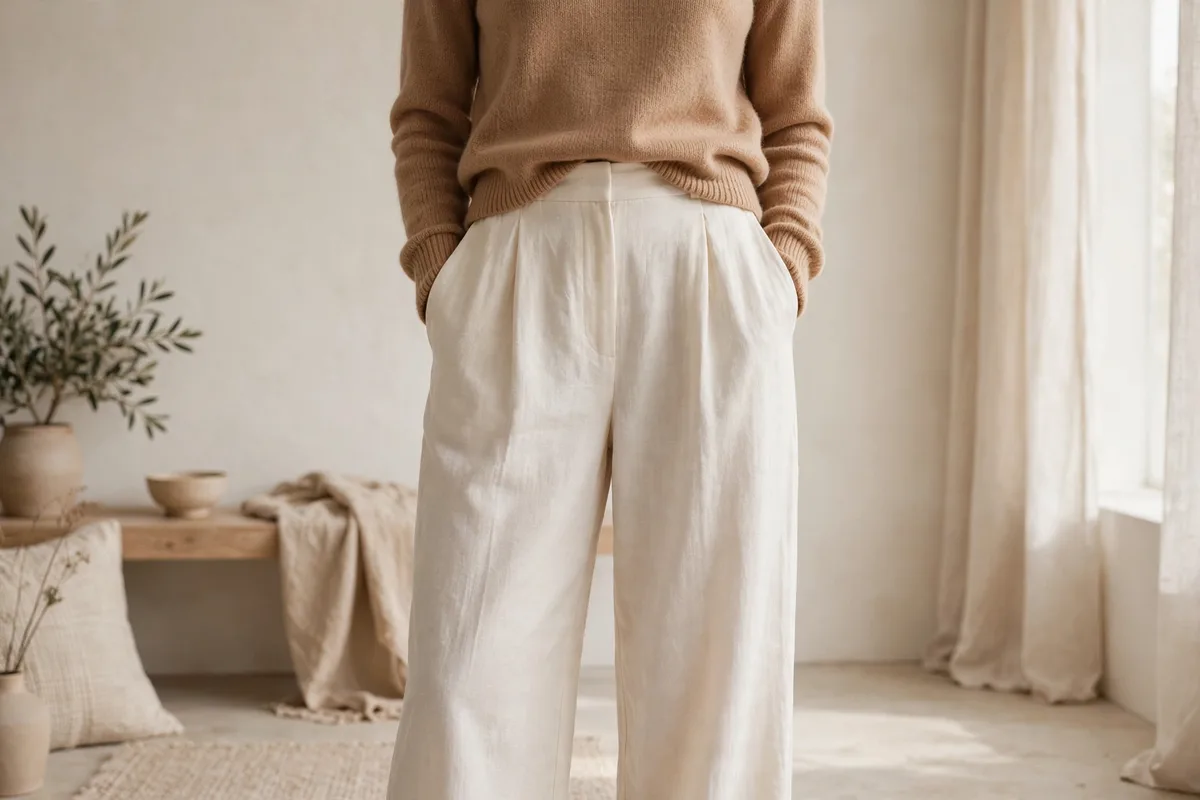
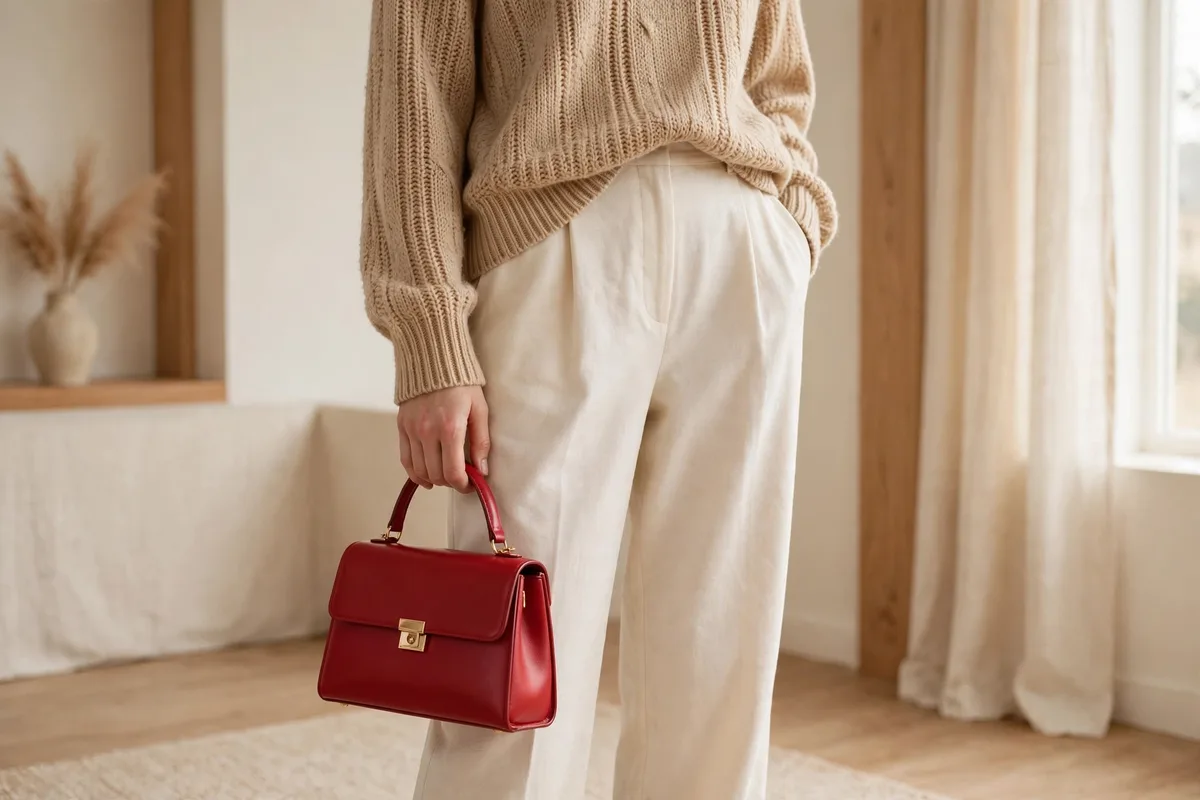
The 27 Piece Fall Capsule Wardrobe With 40 Outfit Combinations
A 27 piece fall capsule wardrobe, counted honestly: the exact pieces, the color palette, and the maths behind 40 outfit combinations from one small rail.
By ClosetFormulas Editors · October 20, 2026
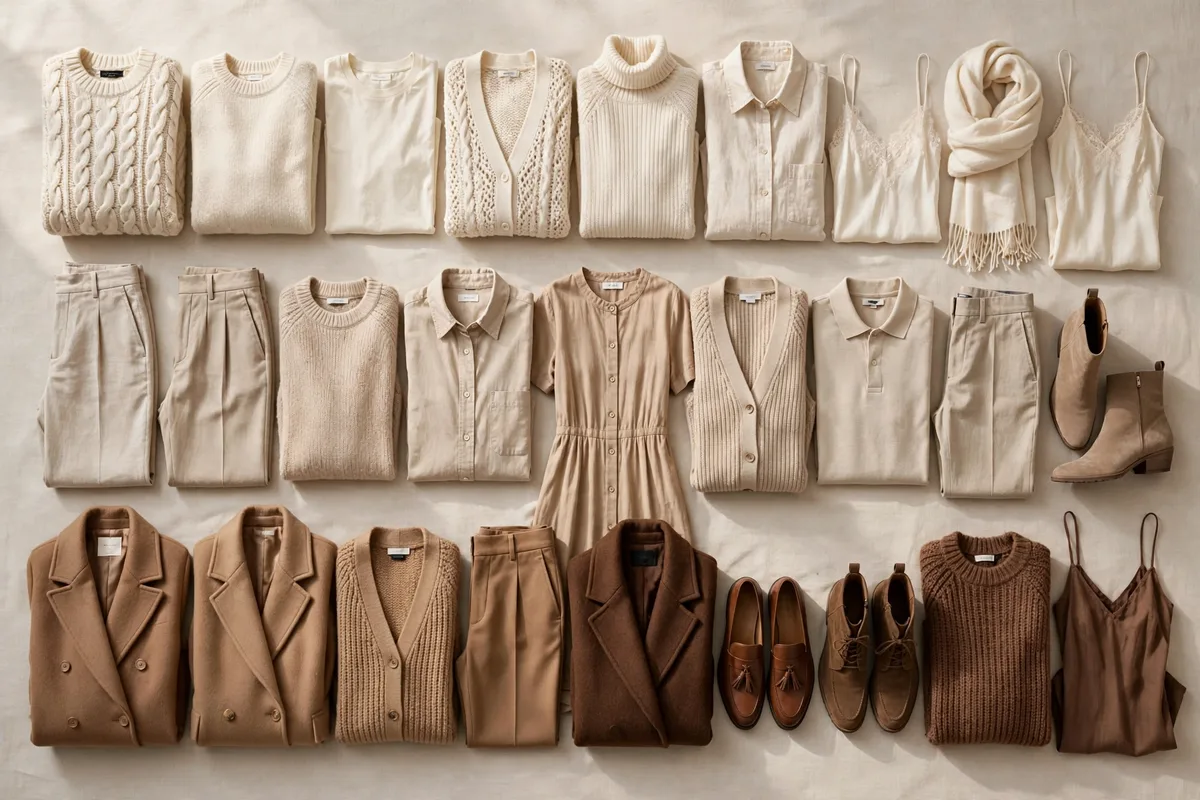
Yes, 27 pieces really can make 40 outfits, and this guide proves it with the count done in the open. The secret is not the number 27. The secret is that every piece is chosen to combine with the others: six tops that all work with five bottoms, four layers that fit over everything, and a palette of three neutrals with two accents, so almost any top half meets any bottom half and looks deliberate. Build the combinations first and the small rail stops feeling like a limitation. It starts feeling like a system.
What is a fall capsule wardrobe?
A fall capsule wardrobe is a small set of clothes, usually 25 to 35 pieces including shoes, selected for one season so that nearly everything combines with everything else. It is not a uniform and it is not minimalism for its own sake. It is a working rail: fewer pieces, far more outfits, and no orphan items that only match one thing you rarely wear. Fall is the easiest season to capsule, because layers multiply combinations without multiplying clothes.
The 27 pieces, counted honestly
Here is the full list. Nothing is hidden, shoes and accessories are counted, because a capsule that quietly excludes them is lying about its size.
Tops (6): a white tee, a black tee, a striped long sleeve top, a cream knit sweater, a camel sweater, and a white button down shirt.
Layers (4): a camel blazer, a denim jacket, a trench coat, and a chunky cardigan.
Bottoms (5): dark straight leg jeans, black tailored trousers, wide leg trousers in a neutral, a midi skirt, and a second pair of jeans in a medium wash.
Dresses (2): a knit midi dress and a slip dress you can layer over or under.
Shoes (4): white sneakers, ankle boots, loafers, and black heels or heeled boots.
Accessories (6): a camel belt, gold hoops, a structured tote, a crossbody bag, a silk scarf, and sunglasses.
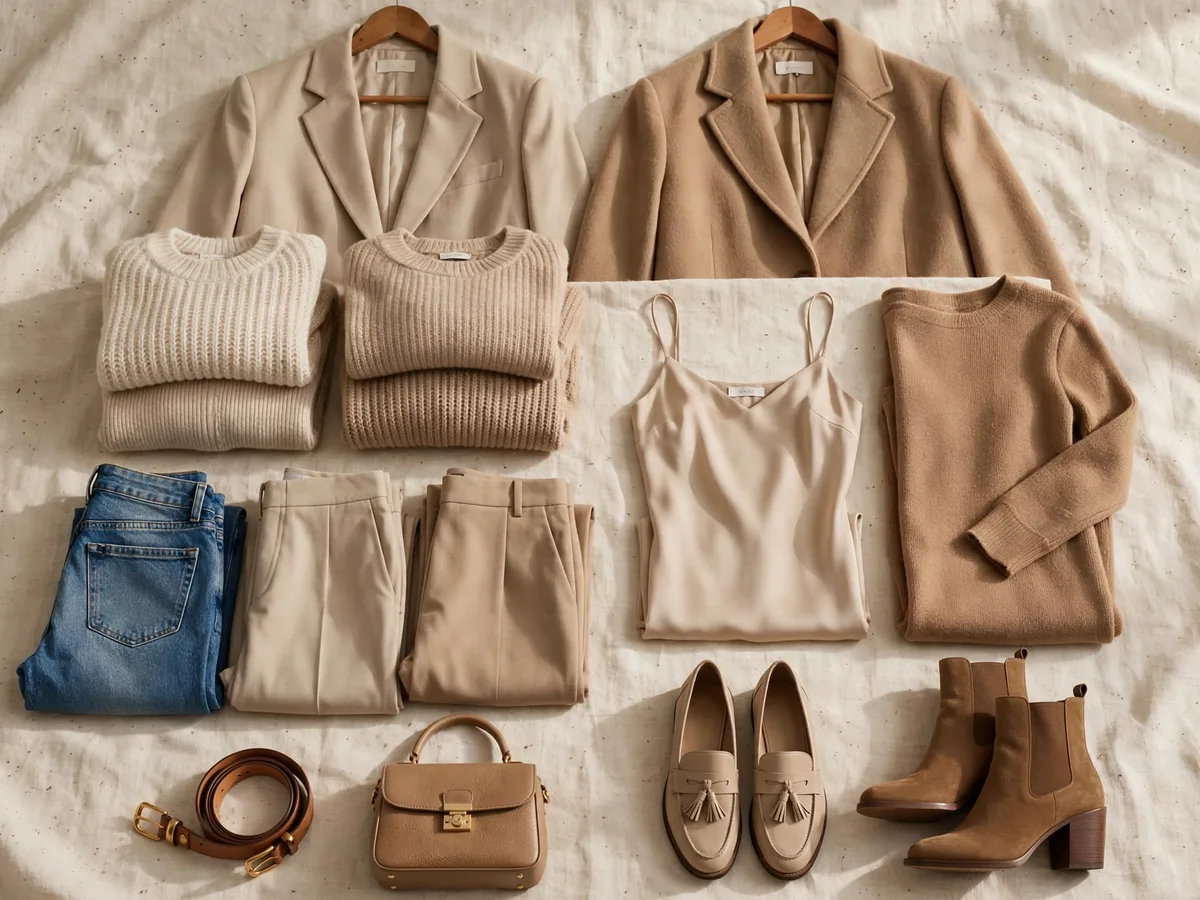
Notice what is missing: prints everywhere, five colors that fight each other, and anything that only works with one partner. Every piece here has at least five partners. That is the whole test.
How do 27 pieces turn into 40 outfits?
The maths is plain multiplication, filtered by honesty. Six tops times five bottoms is 30 base outfits. Add a layer to half of them and the count doubles, but layers only count when the weather agrees, so we claim a modest share. The two dresses give 2 base outfits, and each takes at least three layer and shoe combinations, for 6 more. Total: 36 to 40 wearable outfits before accessories change a single one of them into an evening version.
Seven days of it, so you can see the texture:
- Monday: black trousers, white button down, camel blazer, loafers, tote.
- Tuesday: dark jeans, cream knit, trench coat, ankle boots, crossbody.
- Wednesday: midi skirt, striped top, chunky cardigan, sneakers, scarf.
- Thursday: wide leg trousers, black tee, denim jacket, heels, gold hoops.
- Friday: slip dress, camel sweater over it, ankle boots, belt.
- Saturday: medium wash jeans, white tee, cardigan, sneakers, sunglasses.
- Sunday: knit midi dress, trench coat, loafers, tote, scarf.
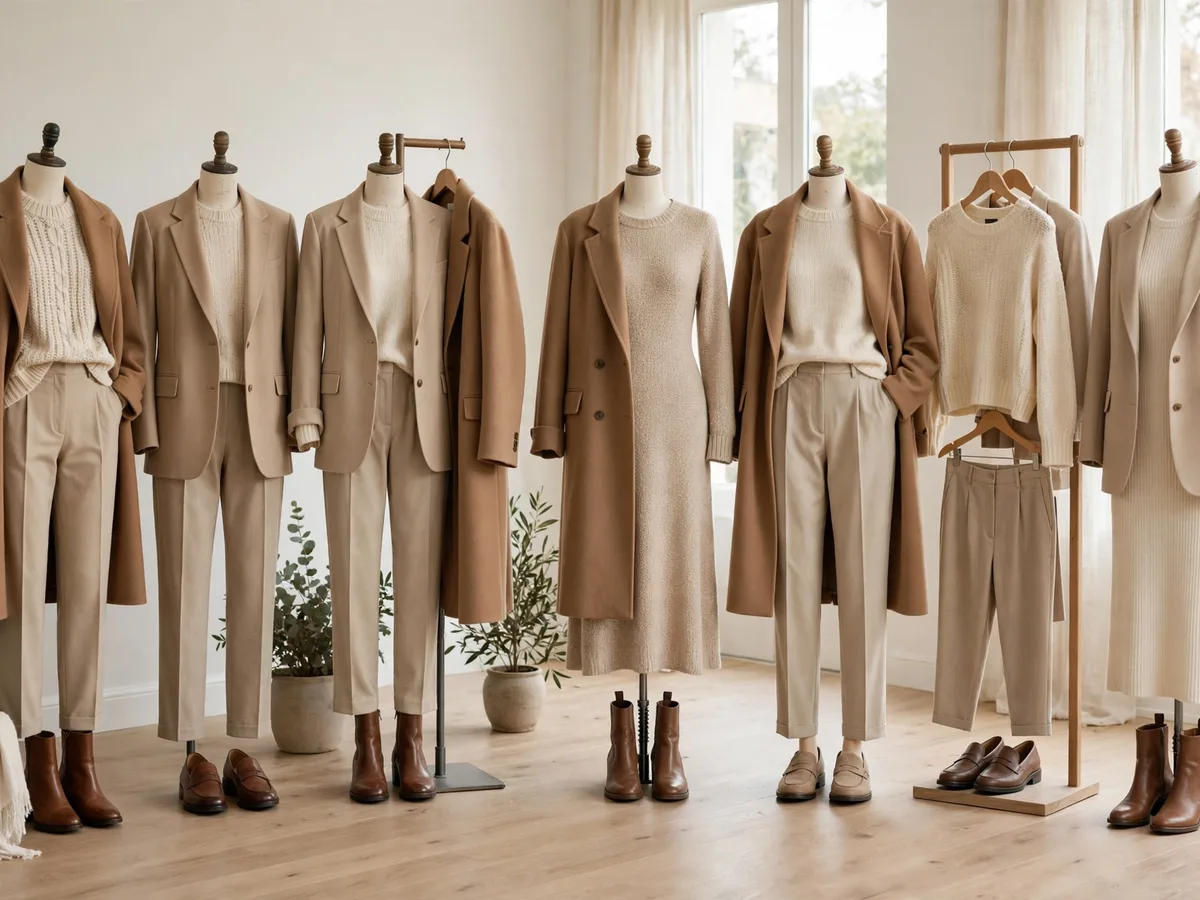
Then accessories quietly multiply everything again. The silk scarf turns Tuesday’s jeans and knit into a different outfit worn on Friday. The belt moves from the trousers to over the slip dress. Gold hoops take Monday’s work outfit into the evening without a full change. None of that is counted in the 40, because outfits changed only by accessories feel like garnish in a count and like a rescue in real life, usually at 6 p.m. when you have somewhere to be and no time to start over.
Which colors hold the capsule together?
Three neutrals do the heavy work: black, cream or white, and camel or tan. Two accents add the interest: in this capsule, burgundy and olive, though cherry red accents and chocolate brown work just as well. The neutrals guarantee the combinations. The accents appear in one or two pieces each, so they season the outfits without ever blocking a pairing. If your closet already leans toward navy and grey, build on that instead. The palette rules matter, the specific colors do not.
Which pieces deserve the most money?
Not all 27 pieces are equal, and your budget should know it. Spend first where wear and visibility are highest. The trench coat and the blazer are worn over everything, seen by everyone, and expected to last five falls, so they take the largest share. Boots and loafers carry you daily and punish cheap construction by November. The two knits sit next to your face and your skin all day, so natural fibers there are worth it. Save without guilt on the tees, the scarf, and the sunglasses, which are cheap to replace and easy to find well at low prices. A useful split for most budgets: about half the money on the four layers and four pairs of shoes, a third on tops and bottoms, and the rest on dresses and accessories. That ratio mirrors how the outfits actually get built, which is the only budgeting rule that survives contact with a real closet.
How do you build this on a budget?
In three phases, and the first phase costs nothing. Phase one: shop your own closet. Most women already own 15 to 20 of these 27 pieces; they are just buried under orphans. Pull out everything that fits the palette and the list, and count what you truly have. Phase two: buy the gaps that block the most outfits, usually one layer and one bottom. Phase three: add the finishing pieces, shoes and accessories, which are small purchases with an outsized effect on how finished an outfit looks. Spreading it across three paychecks keeps the capsule honest and stops the classic mistake: buying a whole new wardrobe in one excited weekend, in colors that fight by November.
What if I dislike some of these pieces?
Swap them, do not stack them. The capsule works by category and count, not by these exact items. If you never wear skirts, the midi skirt becomes a third pair of trousers in a different fabric or wash. If heels are not your life, the heeled boots become a polished Chelsea boot and the count stays honest. If camel washes you out, your neutral trio can be navy, grey, and white instead, with burgundy and forest as the accents. What you cannot do is add a seventh top without removing one, because that is how a capsule quietly becomes a closet again. Change any piece you like. Keep the numbers by category, keep the palette to five colors, and the 40 outfits survive the edits, because the maths never depended on the skirt. It depended on everything combining with everything else.
The rule underneath every capsule: a piece earns its place by its partners, not by its price tag. If it combines with five things you own, it is a capsule piece. If it combines with nothing, it is a costume.
And you will know the capsule is working by week three, not by how it photographs. The signs are boring and wonderful: laundry gets simpler because everything returns to the same small rail; repeat outfits stop feeling like failures and start feeling like a uniform you chose; and the morning question changes from “what do I even have” to “which of my ten favorites today.” If a piece has not been worn by week four, it is not a capsule piece, whatever it cost. Note it, swap it at the season edit, and let the system correct itself.
Start this weekend with the count. Open the closet, list what fits the palette, and see how close your 27 already are. Most readers find they are five pieces away from a calm October, not twenty seven. Our other capsule wardrobe guides pick up where this rail leaves off: travel capsules, work capsules, and the seasonal edits that keep the system honest.
Questions, answered
How many outfits can 27 pieces really make? +
At least 40, and the count is conservative. Six tops with five bottoms already gives 30 pairings before layers, dresses, and shoes change the picture. We counted only combinations we would actually wear out of the house, with the weather and the occasion matching, and stopped at 40 because the honest combinations run well past it.
What is the best first piece to buy for a fall capsule? +
The layer you will wear most, which for most women is a camel or black blazer, or a good trench coat. One strong layer upgrades every top and bottom you already own. Buy it after you have listed what is in your closet, not before, so it matches the palette you actually have.
Can a fall capsule work for both office and weekends? +
Yes, if at least half the pieces are plain, well fitting basics in neutral colors. The same trousers take a blazer and loafers on weekdays and a tee and sneakers on Saturday. The capsule fails for work when it is built only from casual fabrics, so include two tailored pieces from the start.
How do I adapt this capsule for a colder climate? +
Swap two pieces, not the whole system. Trade the denim jacket for a wool coat and one dress for a second heavy knit, then add thermal layers underneath, which do not count as capsule pieces because they are never seen. The palette and the outfit maths stay exactly the same.
How often should I refresh a capsule wardrobe? +
Once a season, and mostly by editing rather than buying. Retire anything worn out or never reached for, note the gap it leaves, and only then shop, with the gap written down. Most capsules need two or three new pieces a season, not a new wardrobe.